
A European customer engagement platform
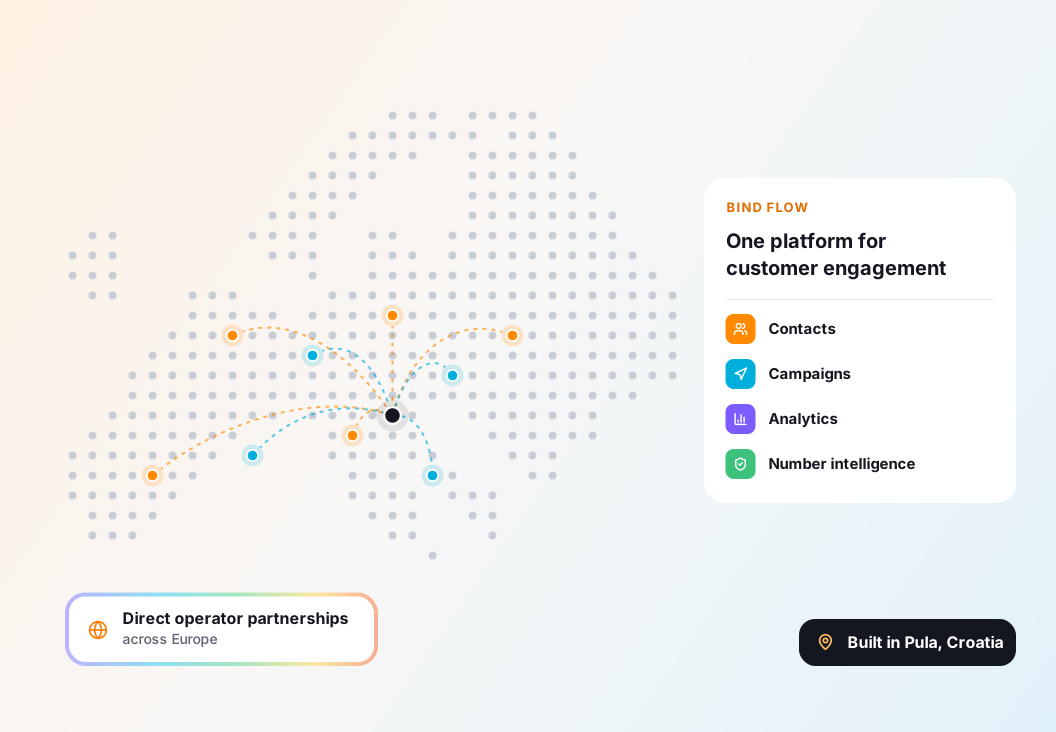

What Bind actually does
- One platform, four modulesBind is a European customer engagement platform. Companies use it to hold their contact data, build and send campaigns across SMS, RCS, Viber and WhatsApp, measure what those campaigns did, and check that the numbers they hold are reachable before they send to them. Those four capabilities are modules of one platform rather than four products stitched together, which means one contract, one supplier and one place where a campaign is planned, sent and read back.
- European, and run as oneThe company is European and operates as one: data stays in the EU, the terms are written to European law, and the people who answer a support question are in the same regulatory environment as the client asking it. That matters less as a marketing claim than as a procurement fact — it removes an entire class of question from a supplier review.
- Direct operator partnershipsThe messaging underneath is not resold. Bind holds direct partnerships with mobile operators, which is unusual for a company building product on top of it, and it is the part most engineers here find interesting.


How Bind got here
What Bind was
A wholesale mobile messaging business. Bind worked directly with mobile operators and moved other companies' messages at volume — reliably, at scale, and largely invisibly. The customer was another business in the messaging chain, and the product was delivery.
What changed
Delivery stopped being the hard part. What companies could not do was decide who to message, with what, and know afterwards whether it worked. The value moved from moving messages to making campaigns more effective — and that is a different business, not a bigger version of the old one.
Where Bind is today
A platform the client uses directly, built on the same operator relationships. The telecom foundation did not get replaced; it became the layer everything else stands on, which is why the platform can promise delivery and not only software.
How Bind thinks
Bind takes the brief apart before agreeing to it. Most requests that arrive as "we need to send more" turn out to be a targeting problem or a data problem, and saying so early is more useful than delivering exactly what was asked for.

We are always on the lookout for more talent